DSN_HWB
A July 2, 2026, article spans payment for pharmacist-provided services; the Main Street Pharmacy Access Act/Ensuring Community Access to Pharmacist Services Act; the NACDS-endorsed Milken Institute pharmacy care roadmap; the NACDS Nourish My Health national consumer education campaign; chronic disease screening; nutrition and wellness; supplements; PBM reform; and the recognition of pharmacy as a trusted and accessible healthcare destination.
The full article follows, or read it on DrugStoreNews.com.
In addition, check out select related content from the past month:
- NACDS Commends Washington Post Editorial Board on Scope-of-Practice Stance
- NACDS Quoted by Congressional Committee on Main Street Pharmacy Access Act
- A Vermont Pharmacist Reflects on the State’s New Test-and-Treat Law
- NACDS Weighs In with CMS on Interoperability
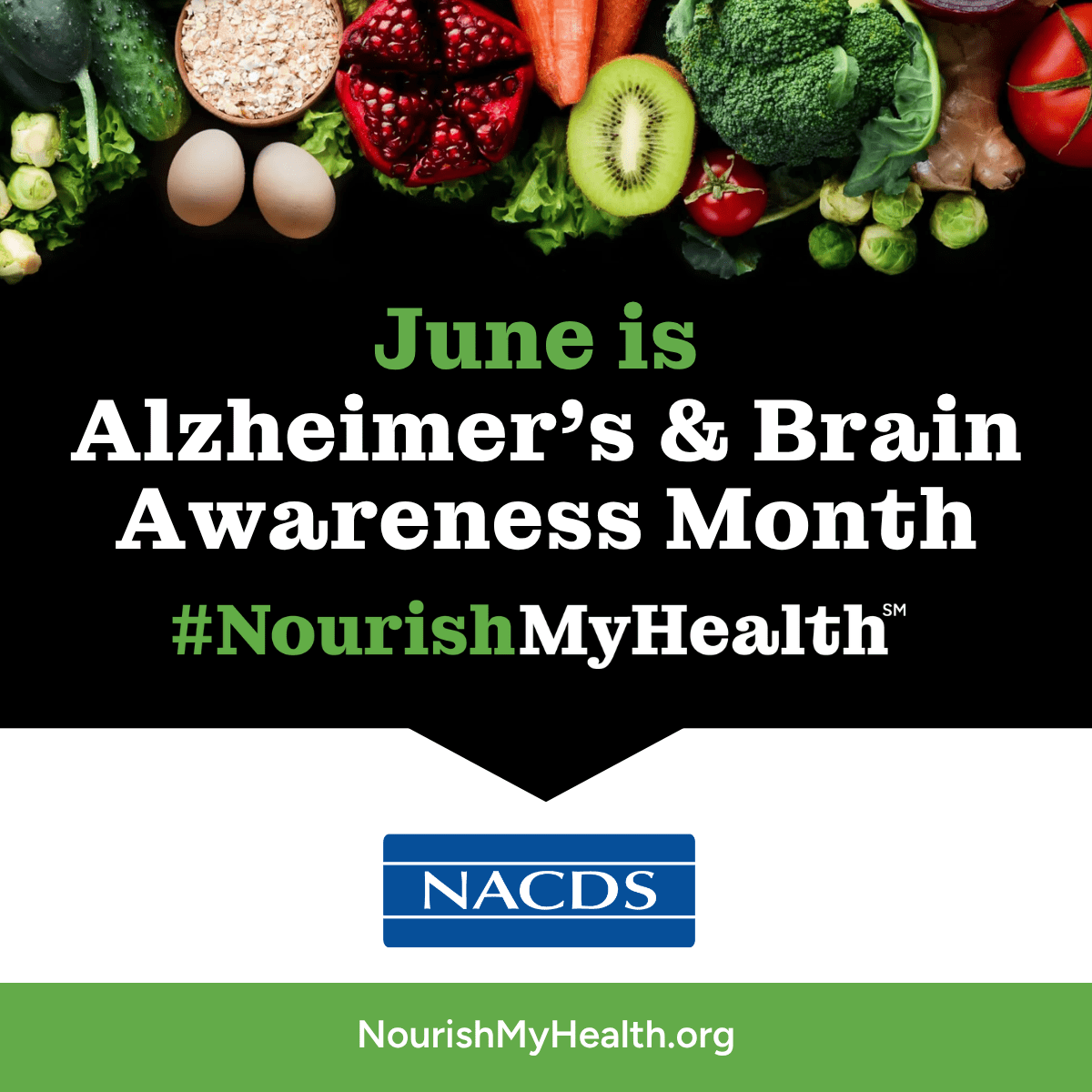
- NACDS’ Nourish My Health Campaign Honors Alzheimer’s & Brain Awareness Month
Can MAHA help make pharmacy healthy again?
The Make America Healthy Again movement may have already provided retail pharmacies with the biggest economic life saver ever—along with the cultural cue to think about redefining pharmacy’s place in the healthcare system.
Taffel Sturgeon, July 2, 2026
Disruption. If there’s one word to describe Robert F. Kennedy, Jr.’s, Make America Healthy Again movement, it’s disruption. And any time there’s a disruption in the force, it’s wise to fall back on the age-old aphorism: Where some prosper, others perish.
Another word that may come to mind when medical professionals think of RFK, secretary of the U.S. Department of Health and Human Services, is vaccines. That’s the flash point. There’s also the opportunity side—clinical services that fit the MAHA mood, nutrition and supplements, a front-end rethink and more health and an imperative for retail pharmacy to choose what kind of health destination it wants to be.
The winners will be the retailers that can defend evidence-based care, support chronic-disease screening, grow supplements and embrace vibes-based wellness.
PBM reform
Since the Trump administration took office, community pharmacy can boast one big national legislative victory that they will long savor (with caveats).
On the eve of the Trump administration assuming office, on Jan. 17, 2025, the National Association of Chain Drug Stores sent a letter to the president-elect, enumerating “four wins to make America healthy again.” The first and biggest win on the NACDS list was the PBM Reform Act of 2025 and subsequent omnibus legislation signed in February 2026. It lowered prescription drug costs and—heard over the din of champagne corks popping in pharmacies across the land—reduced the power of pharmacy middlemen.
“Stop the rip-off,” wrote NACDS president and CEO Steven C. Anderson in the letter to Trump. “It is time to stop the pharmacy benefit manager middlemen from inflating Americans’ drug prices, from barring access to Americans’ pharmacy of choice, and from forcing pharmacies out of business.”
To help push the PBM reform over the finish line, the NACDS noted an astonishing anecdote that complex negotiations between PBMs and Medicare Part D plans resulted in a single drug having 2,200 different price points with a spread of thousands of dollars depending on the location of the beneficiary.
Beyond PBM reform
But while PBM reform has long been a complaint of pharmacy managers—right up there with reimbursements—the seminal legislation has not yet been a financial silver bullet.
“PBM reform doesn’t magically fix the economics overnight,” said Jeremy Faulks, director of specialty pharmacy at Thrifty White Pharmacy, a chain of 88 drug stores serving the upper Midwest, “but it moves the system toward more transparency, fewer spread opportunities and a clearer path to enforcing reasonable contract standards.”
For pharmacies, said Faulks, that means less surprise margin volatility and a better chance to plan staffing, inventory and clinical services with more confidence. Off the front lines, trade groups have the same type of response—a clear win but not exactly a panacea. That’s because while PBM reform improves reimbursement transparency, it does not directly pay for preventive services.
So what still needs to happen—at the federal or state level—to make services like screening, counseling and chronic disease support financially sustainable for pharmacies?
“At the federal level,” said Andrea Pivarunas, senior director of public affairs at the National Community Pharmacists Assocition, “passage of the Ensuring Community Access to Pharmacist Services (ECAPS) Act remains critical.” The bill would establish a Medicare Part B payment pathway for pharmacists’ services, particularly for testing, screening and treatment of common conditions.
“At the state level,” Pivarunas continued, “broader payment parity for pharmacistprovided services is essential.” That includes, she said, recognizing pharmacists as providers (where not already done) and ensuring Medicaid and commercial plans reimburse for services such as counseling, point-of-care testing and chronic disease management at rates comparable to other qualified providers. In a word: reimbursements.
A road map to legislation
Next on the list are policies that enhance Americans’ access to pharmacist-provided services. One roadmap, authored by The Milken Institute and endorsed by NACDS, is the Advancing Health Through Expanded Access to Pharmacy-Based Care report. This action plan identifies 13 priority services centered on chronic disease prevention and management, mental and behavioral health and reproductive and sexual health that build on existing pharmacy workflows.
These ideas address pressing public health needs by providing screenings, medication management, immunizations and holistic interventions aimed at medical and social needs.
“By advancing payment models, standardizing credentialing and leveraging technology,” said Anderson, “we can empower pharmacists to deliver the full spectrum of clinical services that communities demand.”
It urges federal and state leaders to create the necessary pathways for payment for pharmacists’ clinical services, and to align scope-of-practice laws and regulations so that patients can benefit fully from pharmacists’ singular education and training. In a word: reimbursements. The nutrition gap In many ways, retail pharmacy has already begun testing the model that MAHA is now accelerating.
The NACDS “Nourish My Health” campaign, launched in 2023 with participation from more than 10 chain pharmacy companies, mobilized pharmacies to expand preventive screenings, nutrition education and wellness offerings. You might say that “Nourish My Health” was basically MAHA before MAHA had a name.
Since its launch, the initiative has galvanized thousands of pharmacy locations to reach millions of Americans with more than 60,000 biometric screenings—baseline wellness tests designed to flag conditions and comorbidities before they become cataclysmic for patients.
Participating pharmacies have also expanded guidance on vitamins, supplements and healthier product options, signaling an early shift toward positioning the pharmacy as a destination for prevention and chronic disease support— not just dispensing. “Pharmacies are the ideal destination,” said Anderson, “for comprehensive services that include nutrition information and education.”
The supplement opportunity
Most mom-and-pop health-food stores rely on high-margin dietary supplements to keep them afloat. Purveyors provide valuable education to customers of the value that vitamins, minerals and herbs provide—to fill nutrition gaps in Americans’ typically unhealthy diets, but also to help customers avoid pharmaceuticals and their much-ballyhooed alarmism around undesired side effects.
“For many Americans, meeting nutrient recommendations through food alone is challenging—sometimes due to limited food sources, increased nutritional needs during certain life stages, or other real-world barriers,” said Steve Mister, president and CEO of the Council for Responsible Nutrition, a supplements trade group. “By appropriately recognizing dietary supplements as a way to help fill nutrient gaps, the agencies have taken an important step toward improving public health and ensuring the Dietary Guidelines are both evidence-based and practical.”
The new Dietary Guidelines released by Health and Human Services make particular mention of key supplement nutrients that are needed by various populations:
-
- For birth-4 years: vitamin D
- For older adults: vitamin D, calcium, vitamin B12 and protein
- For vegetarians: vitamin D and E, choline and iron
- For vegans: vitamins A, D and E, B6 and B12, riboflavin, niacin, choline, calcium, iron, magnesium, phosphorus, potassium, zinc and protein.
Redefining the access point
For the first time in years, pharmacies may have both the financial breathing room and the cultural momentum to redefine their role.
Receiving reimbursement for services beyond writing scripts is not just a laudable goal but would also signal that pharmacies offer services that can truly help the health of patients.
Providing vaccines is the obvious example. But so too are a litany of other services for which pharmacies are uniquely positioned to help. So what should pharmacies actually look like to serve the health needs of Americans?
Addressing the chronic disease epidemic is one of the primary targets of MAHA. If there’s one thing COVID revealed, it was the underlying unhealthiness of Americans—three primary comorbidities of obesity, diabetes and cardiovascular disease invariably led to worse outcomes.
These diet-related comorbidities are a bull’s-eye for MAHA. Many pharmacies also have food offerings within their broader retail stores, while some grocery stores with pharmacies also offer dietitian services. Promoting access to nutritious foods and encouraging uptake of healthcare services to better prevent and manage chronic diseases are core to the value that pharmacies provide.
But let’s be real here. Some drug stores are not inaccurately described as a convenience store with a pharmacy in the back. Walk in and the first things on offer are impulse-buys–such as sweets, and snacks. There is a clear opportunity for pharmacies to champion chronic-disease management by promoting access to nutritious foods. So who’s ready to take that step and risk losing high-margin if unhealthy offerings?
Think about it this way: Is a convenient purveyor of junk food ready to be a true healthcare provider? That does not mean pharmacies must become health-food stores tomorrow, but it gives them cover to test smaller junk-food footprints, cleaner snacks, protein and hydration sets, healthy grab-and-go, and more overt “food as health” merchandising.
The identity shift
That’s the challenge. That’s the opportunity. Yet instead of biting that bullet, for now, pharmacies seem to be falling back on offering blood-glucose monitoring and other services.
“The goal to ‘Make America Healthy Again’ is a tall order,” agreed Anderson. “It’s time to rely on pharmacies as a healthcare destination—starting with baseline screening for blood sugar, blood pressure and cholesterol and continuing with a plan to reduce and manage risk.”
Pharmacies do report offering screenings to help identify people who are at-risk of chronic diseases and to help link them to follow-up care for further evaluation and treatment.
“There’s growing momentum behind pharmacy-led wellness models that include screening for high blood pressure and potentially A1C/blood glucose/ cholesterol, brief coaching, medication optimization, and coordination with the broader care team,” said Faulks. “These types of services are being more standard as we continue our shift to grow clinical services and expand patient access.”
Imagine your store undergoing the identity shift from “dispensing” to “local healthcare access.” Pharmacies can be the place where a patient gets screened, gets coached, gets a rapid pathway to treatment when appropriate and gets help staying adherent to therapy—especially in communities where primary care access is tight.
“We’ll carry some OTCs and key vitamins and supplements,” said Faulks, “but overall, we want our pharmacies to be seen as the most accessible healthcare professional in town.”